
SeamTrac Legato — 360° Inline Can Seam Inspection
Overview
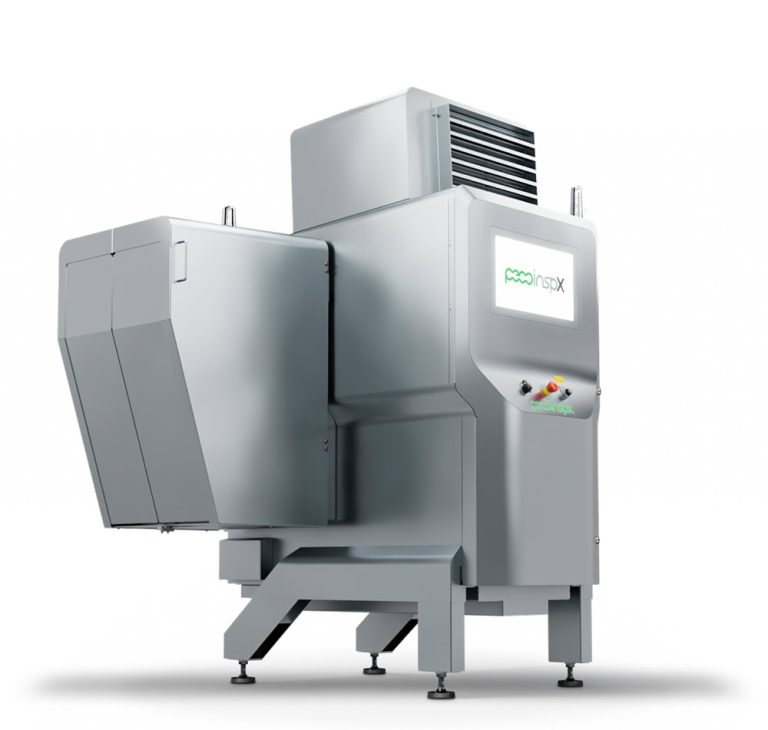
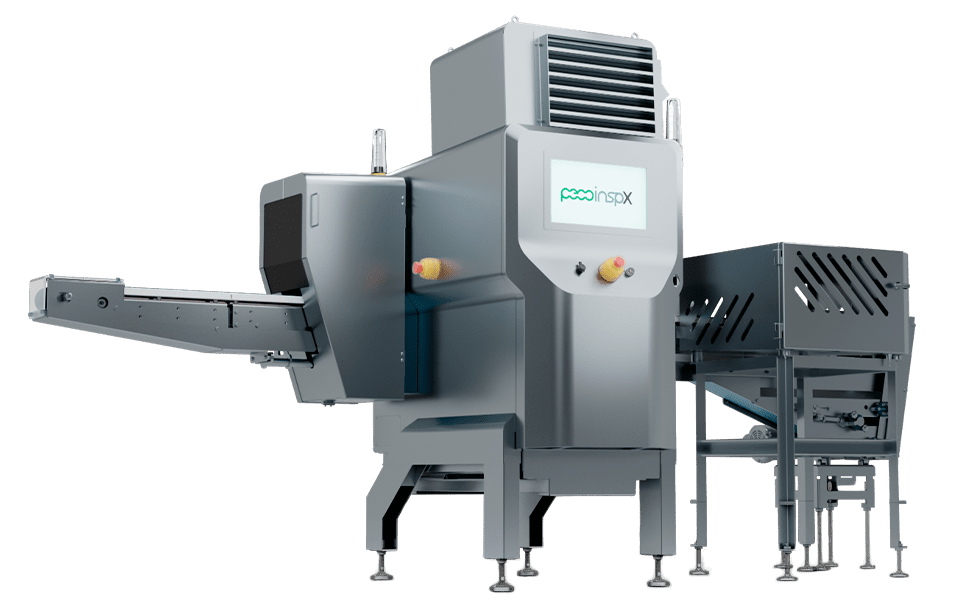
LEGATO X-RAY INSPECTION SYSTEM
Introducing SeamTrac Legato: The first inline, 360-degree, non-contact seam inspection system. SeamTrac Legato sets a new standard in canning quality control with real-time defect detection, advanced seamer monitoring, and precise headspace control.
Multiple X-ray inspection beams with overlapping coverage enables the Legato to inspect within multi-layered seams to identify a range of defects.
The SeamTrac Legato Inspection System delivers non-contact inspection at speeds up to 1200 CPM. System mounts on the existing single file seamer discharge conveyor and only requires 7.5’ of linear space. It provides early detection of seam defects, ejecting critical defective containers from the line, minimizing waste and further processing.
SeamTrac is designed to detect reliable deviations and defects in seam integrity. It monitors seamer performance in real-time, helping operators identify potential issues before they impact product quality.
How Manufacturers Inspect Can Seam Integrity Today
Manual teardown analysis is well-established and regulatory-compliant. It is also, by its nature, a statistical sample. On a line running 800 CPM, a 30-minute teardown interval means one directly inspected can in every 24,000 — and even then, only three or four cross-sections of a seam that spans 360 degrees. Localized defects: a droop covering less than 5% of the circumference, a false seam segment or a short hook can be present in a can that passes every dimensional check at every sampled point. Even when seam defects are identified through sampling, thousands of cans from the same seamer will have already moved into labeling.
Optical systems inspect every can but see only the surface. Short body hooks, insufficient overlap, and false seams are internal conditions, invisible to any camera regardless of resolution.
The result is a quality program that is incomplete.
What the SeamTrac Legato Changes
The SeamTrac Legato is the first and only inline, 360-degree, non-contact can seam inspection system that detects all critical defect types. Multiple high-contrast X-ray beams with overlapping coverage penetrate the multi-layered seam structure and image internal geometry — hook lengths, overlap, structural anomalies — on every can, at speeds exceeding 1,200 CPM. It mounts over the existing seamer discharge conveyor, requires no product contact, and fits in just 7 feet of line space.
No angular blind spots. No line reconfiguration. No delay in problem identification and rejection.
Customers can see ROI in less than 6 months.
Seamer Intelligence, Not Just Defect Detection
Every inspection result is attributed to the specific seamer head that produced it, tracked in real time through the Peco Seam Score. AI-directed predictive maintenance identifies heads that are degrading before they produce defects at scale. On-Demand QA Sampling lets operators pull a sample for teardown from any head without stopping the line.
The outcome is a shift from reactive quality management to proactive seamer maintenance — catching problems earlier, reducing defective output, and making better-informed service decisions. Improve your ROI and OEE with SeamTrac Legato.
Want to go deeper? Download our complete guide to can seam defects, causes, and detection →
Features
Inline Inspection of Every Can
Advanced Seamer Tracking
Headspace Monitoring
Return on Investment
Typical Applications

Droops

Cut/Cracked Seam

Knocked Down Flange

False Seam

Vee, U-shape, Spur, Lipper

Short Cover/Body Hook
Seam Wrinkle
Lap Defects
Insufficient Overlap
What Makes Peco Inspx X-ray Systems Different?

High Speed Operations

Service

Software

Made in America
Tech Specs
Technical Information
Machine Architecture
X-ray Tube Configuration
Conveyor
Aperture Size
Environment
Line Speed
Input Voltage
Air Supply
Ambient Temperature
Air Conditioning
Diode Size
Container Ejection
Dimensions (LxDxH)
Safety Rating
Computer
Connectivity (Optional)
Supported SCADA Systems
Supported Cloud Platforms
Operator Interface
Construction
Technical Information